Tree Care Guide: How to Install Mulch Around a Tree

how to install mulch around a tree

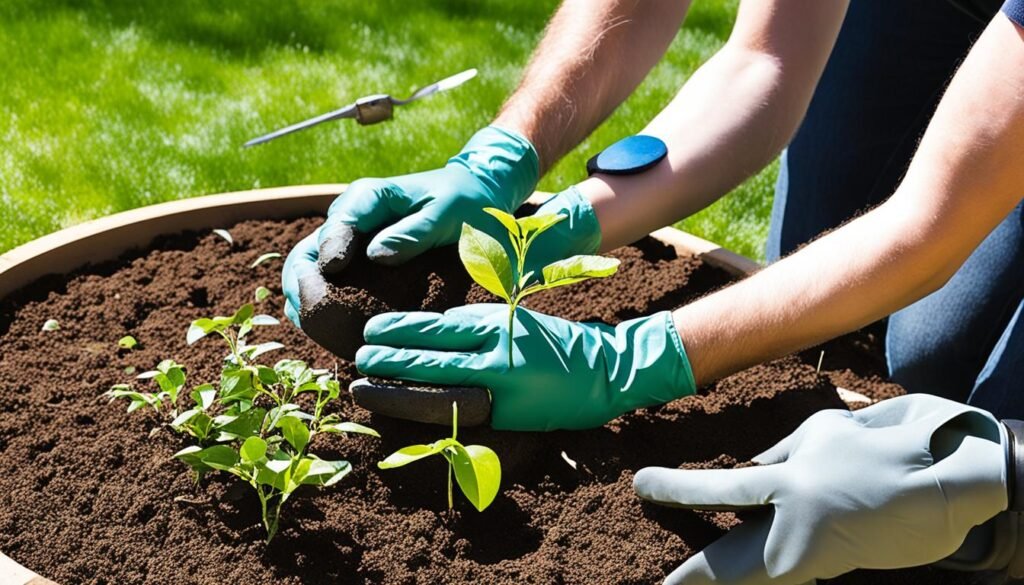
Did you know that proper mulching around trees can significantly impact their health and longevity? Mulching offers a wide range of benefits, including weed suppression, moisture retention, temperature regulation, erosion prevention, and disease management. By following the best practices and step-by-step instructions in this guide, you can learn how to install mulch around a tree effectively and ensure vibrant growth.

Key Takeaways:

  • Mulching around trees provides numerous benefits for tree health and maintenance.
  • Proper mulching helps suppress weeds, retain moisture, regulate temperature, prevent erosion, and protect against diseases.
  • Clear the area, trim up-growing roots, remove weeds, choose the right mulch, apply it properly, maintain the recommended depth, create a barrier, and monitor moisture levels for successful tree mulching.
  • Benefits of proper mulching include improved tree health, weed control, soil improvement, erosion prevention, and water conservation.
  • By following the guidelines in this guide, you can enhance the beauty and longevity of your trees and create an ideal environment for their growth.

Why Mulch Around Your Trees?

Mulching around trees offers numerous benefits. It helps suppress weeds, retain moisture in the soil, regulate temperature, prevent erosion, and protect against diseases. By mulching your trees properly, you provide them with optimal growing conditions and promote their overall health and resilience.

  • Weed Suppression: Mulch acts as a barrier, preventing weeds from germinating and competing with your trees for nutrients and sunlight.
  • Moisture Retention: A layer of mulch helps retain moisture in the soil, reducing the need for frequent watering and improving the drought tolerance of your trees.
  • Temperature Regulation: Mulch acts as insulation, regulating soil temperature by keeping it cooler in hot weather and warmer during winter months.
  • Erosion Prevention: Mulch prevents soil erosion caused by heavy rainfall or wind, protecting the tree’s root system and preventing nutrient loss.
  • Disease Prevention: Mulch creates a protective barrier around the tree trunk, reducing the risk of soil-borne diseases and pests from infecting your trees.

By taking the time to mulch around your trees, you can enjoy these benefits while enhancing the overall appearance and health of your landscape.

As you can see, mulching offers a holistic approach to tree care, supporting their vitality and longevity. But how do you properly mulch around your trees? In the next section, we will provide step-by-step instructions to guide you through the process and ensure the best results.

Steps to Properly Mulch Around Your Trees

To ensure healthy and thriving trees, it is essential to properly mulch around them. Follow these step-by-step instructions to create an optimal environment for your trees.

  1. Clear the area: Start by removing any rocks, dirt, or old mulch around the tree. A clean area provides a fresh foundation for the mulch.
  2. Trim up-growing roots: Check for any up-growing roots that may be wrapping around the tree trunk. Trim them carefully to prevent any damage or hindered growth.
  3. Remove weeds: Ensure the area is free from weeds and other unwanted vegetation. Weeds can compete for nutrients and moisture, affecting tree health.
  4. Choose the right mulch: Select the appropriate mulch for your tree. Organic options like wood chips or bark mulch provide excellent benefits, such as moisture retention and organic matter enrichment.
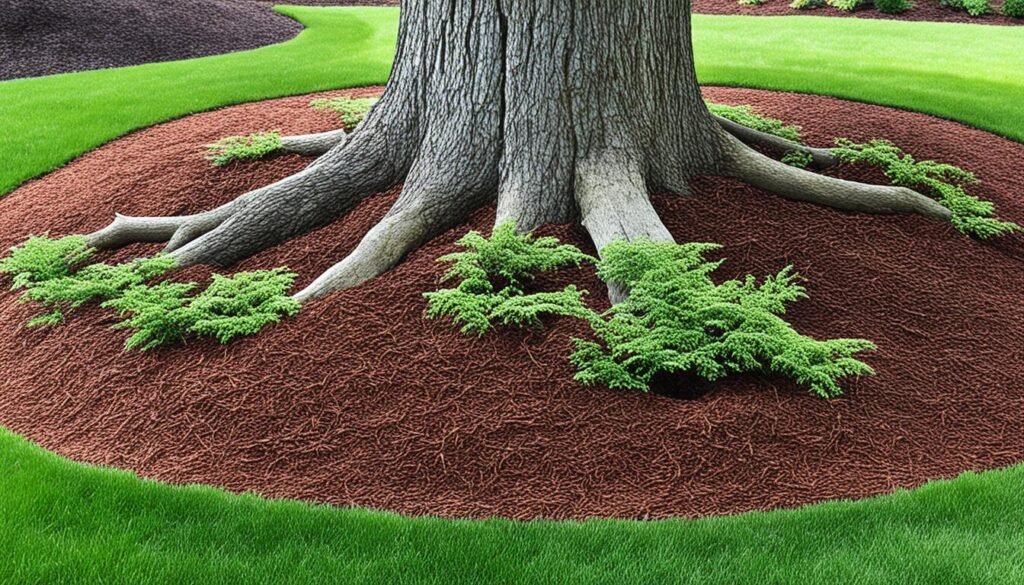
  5. Apply the mulch: Spread the mulch evenly around the tree in a circular pattern. Leave a gap of a few inches between the mulch and the base of the tree to prevent moisture accumulation at the trunk.
  6. Maintain the mulch depth: The recommended mulch depth is typically 2-4 inches. It helps regulate soil temperature, retain moisture, and prevent weed growth. Ensure you maintain the desired depth consistently.
  7. Create a barrier: Use edging materials or create a natural barrier to contain the mulch and prevent it from spilling onto nearby grass or walkways.
  8. Consider seasonal mulching: Depending on your climate, it may be beneficial to mulch around trees seasonally. This can help protect tree roots from extreme temperatures and conserve moisture during hot, dry seasons.
  9. Monitor moisture: Regularly check the moisture levels in the mulched area. Ensure it is neither too dry nor too wet. Adjust the watering schedule accordingly to maintain optimal moisture levels for tree health.

Follow these steps to properly mulch around your trees and provide them with the best growing conditions. Remember to clear the area, trim up-growing roots, remove weeds, choose the right mulch, apply it properly, maintain the recommended depth, create a barrier, consider seasonal mulching, and monitor moisture levels.

Benefits of Proper Mulching

Proper mulching provides a range of benefits for your trees and the environment. By mulching your trees correctly, you create an ideal environment for their growth and contribute to a sustainable and beautiful landscape.

Promotes Tree Health: Mulching helps maintain tree health by creating a protective layer around the base of the tree, shielding it from extreme temperatures and fluctuations. It also helps retain moisture, ensuring that trees have access to an adequate water supply throughout the year.

Suppresses Weeds: Mulch acts as a natural weed suppressor, preventing weeds from competing with your trees for essential nutrients, water, and sunlight. This reduces the need for herbicides and manual weed control, making tree maintenance easier and more efficient.

Improves Soil Structure and Fertility: Mulch gradually decomposes over time, enriching the soil with organic matter and essential nutrients. This enhances soil fertility and improves its structure, promoting healthy root development and facilitating nutrient absorption for the trees.

Prevents Erosion: The layer of mulch around your trees acts as a barrier, preventing soil erosion caused by wind and rain. It helps maintain the integrity of the soil and protects the tree’s root system, which is essential for the tree’s stability and overall health.

Conserves Water: Mulch helps conserve water by reducing evaporation. By acting as a protective covering, it slows down water loss from the soil, allowing the tree’s roots to efficiently absorb and use the available water. This is particularly important during dry periods when water conservation is crucial.

tree health

By reaping the benefits of proper mulching, you not only ensure the health and longevity of your trees but also contribute to the overall well-being of the environment. Implementing mulching practices that prioritize tree health, weed control, soil improvement, erosion prevention, and water conservation creates a sustainable landscape that thrives for years to come.

Conclusion

Mulching around trees is a vital aspect of tree care that plays a significant role in maximizing tree health and promoting vibrant growth. By following the proper steps outlined in this guide, you can create an optimal mulching environment for your trees to thrive.

Remember to start by clearing the area around the tree, removing rocks, dirt, and old mulch. Trim any up-growing roots and ensure the area is weed-free. Choose the right mulch, such as organic options like wood chips or bark mulch. Apply the mulch in a circular pattern, leaving a gap between the mulch and the tree base. Maintain a recommended mulch depth of 2-4 inches and create a barrier to prevent mulch spillage.

Monitoring moisture levels regularly and considering seasonal mulching are crucial for the long-term health of your trees. By following these guidelines, you can reap the benefits of proper mulching, including enhanced tree health, weed control, improved soil structure, erosion prevention, and water conservation. Take care of your trees by installing mulch properly, and enjoy the beauty and longevity they bring to your landscape.

FAQ

Why should I mulch around my trees?

Mulching around trees offers several benefits, including weed suppression, moisture retention, temperature regulation, erosion prevention, and disease management. It promotes the overall health and longevity of your trees.

How do I properly mulch around my trees?

To properly mulch around your trees, follow these steps: clear the area, trim up-growing roots, remove weeds, choose the right mulch, apply the mulch, maintain the recommended depth, create a barrier, consider seasonal mulching, and monitor moisture levels.

What are the benefits of proper mulching?

Proper mulching promotes tree health, suppresses weeds, improves soil structure and fertility, prevents erosion, and conserves water. It creates an ideal environment for your trees to thrive.

Source Links

Install Landscape Lighting in Trees: A DIY Guide

how to install landscape lighting in trees

Did you know that installing landscape lighting in trees can completely transform the ambiance and visual appeal of your outdoor space? Imagine the stunning effect of beautifully illuminated trees casting a warm glow throughout your garden or backyard. With the right tools, materials, and knowledge, you can easily undertake this DIY project and bring a touch of magic to your outdoor environment. In this guide, we will walk you through the step-by-step process of installing landscape lighting in trees, providing you with all the information you need to create a captivating outdoor oasis.

Key Takeaways:

  • Installing landscape lighting in trees enhances the ambiance and visual appeal of your outdoor space.
  • Gather the necessary tools and materials before starting the installation process.
  • Design the layout carefully to highlight specific tree features and achieve the desired lighting effects.
  • Call 811 before digging to ensure the location of underground wires and pipes.
  • Test each light fixture for optimal voltage levels to ensure optimal performance.

Types of Landscape Lighting

When it comes to illuminating trees in your outdoor space, there are several types of landscape lighting options to consider. Each type offers its own unique benefits and techniques. Let’s explore the different options:

Solar Landscape Lights

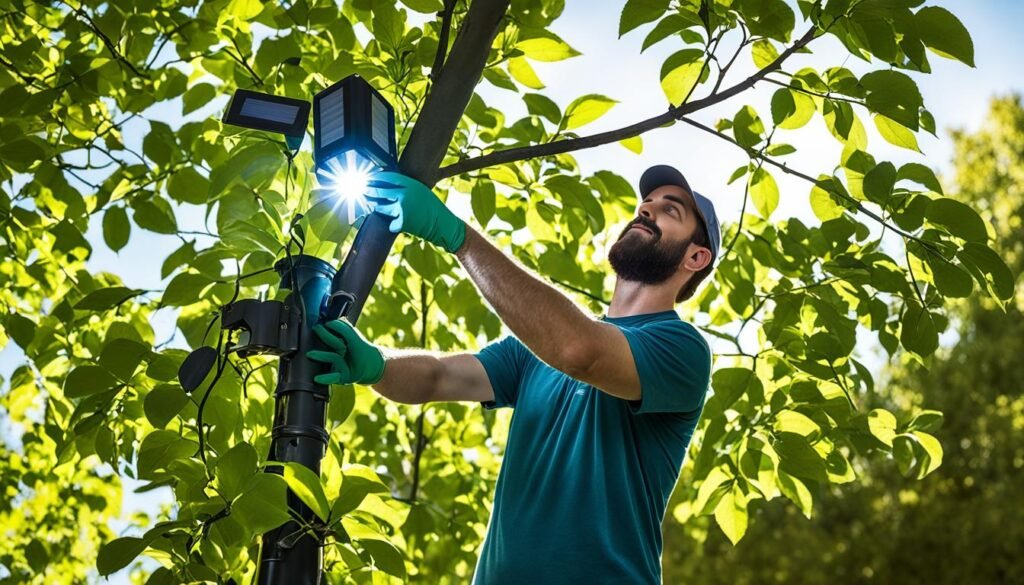
Solar landscape lights are an eco-friendly and wireless solution for illuminating your trees. Powered by a photovoltaic cell, these lights harness the energy from the sun and store it in their batteries. Solar lights do not require any wiring or electricity, making them easy to install and maintain. They are a great choice for those looking for a hassle-free lighting solution.

Low Voltage Landscape Lights

Low voltage landscape lights operate on a transformer that lowers the voltage to 12 volts. These lights are safe, energy-efficient, and provide a soft and ambient glow to your trees. They are easy to install and often come in kits that include everything you need, from lights to a transformer and wiring. Low voltage lights are a popular choice for DIY enthusiasts.

Line Voltage Landscape Lights

Line voltage landscape lights operate on 120 volts and require a more complex installation process. They are typically hardwired to your home’s electrical system and offer a bright and powerful illumination for your trees. Line voltage lights are a great option if you want to showcase specific tree features or create a dramatic lighting effect. It’s important to hire a professional electrician to ensure the installation is done safely and correctly.

When choosing landscape lighting for your trees, consider the specific lighting effect you want to achieve and the features you want to highlight. Whether you opt for solar lights, low voltage lights, or line voltage lights, be sure to follow the best practices for tree lighting to create a stunning outdoor ambiance.

How to Install Solar Landscape Lighting

Solar landscape lighting is a convenient and hassle-free option for illuminating trees without the need for wiring. Follow this step-by-step tree lighting process for a DIY tree lighting tutorial:

  1. Plan the layout: Carefully consider where you want to place the lights to highlight the best features of your trees. Ensure that each light receives sufficient sunlight during the day.
  2. Consult the manufacturer’s instructions: Different solar lights may have specific recommendations for lighting applications and spacing. Review the instructions before proceeding.
  3. Temporarily place the lights: Before installing the lights permanently, temporarily position them along the pathway or area you wish to illuminate. Check the manufacturer’s instructions for recommended spacing.
  4. Assemble the lights: Follow the manufacturer’s instructions to assemble each light fixture. Make sure to expose the solar panels to full sun for 12 to 14 hours before installation.
  5. Install the lights: Once the fixtures are where you want them, drive the stakes into the ground to secure them. Ensure that they remain plumb and upright.
  6. Test the voltage level: After installing the lights, test each light fixture to ensure it is receiving the proper voltage level. Make any necessary adjustments to optimize performance.

Solar landscape lighting offers a simple and effective way to enhance the beauty of your trees. With this step-by-step tree lighting process, you can create a stunning outdoor environment and enjoy the enchanting glow of your illuminated trees.

DIY tree lighting tutorial

Expert Tip:

Consider using solar landscape lights with adjustable solar panels. This allows you to easily position the panels for maximum sun exposure and optimize the performance of your lights.

Conclusion

Transform your outdoor space and create a beautiful ambiance by installing landscape lighting in trees. Whether you opt for solar lights or low voltage lights, proper installation is essential for optimal performance. By following a step-by-step process and using the right tools and materials, you can successfully undertake tree lighting installation as a DIY project.

Consider the specific lighting effects you want to achieve when choosing your lights and take into account the sunlight exposure for solar lights. Planning the layout carefully and ensuring each light receives sufficient sunlight during the day is crucial for solar lighting installations. For low voltage lights, make sure to consult the manufacturer’s instructions for spacing recommendations.

Always test the voltage level of each light to guarantee proper functionality. This will help ensure that your trees are beautifully illuminated and enhance your outdoor environment. With the right techniques and attention to detail, you can create a stunning outdoor space that will be the envy of your neighbors.

FAQ

What materials do I need to install landscape lighting in trees?

To install landscape lighting in trees, you’ll need #10 gauge outdoor wire, #12 gauge outdoor wire, 1-1/2 in. x 12-in. PVC pipe, 1-1/2-in. PVC cap with ½-in. female thread, ½-in. copper pipe, PVC coupler with ½-in. tee for wire opening, lights, weatherproof wire connectors, transformer, ½-in. sweat-to-thread copper adapters, an extension ladder, garden rake, level, posthole digger, safety glasses, voltage tester, wire stripper/cutter, wrench set, volt meter, a garden spade, and aluminum tent stakes.

How do I choose the right type of landscape lighting for trees?

There are different types of landscape lighting to choose from, including solar landscape lights, low voltage landscape lights, and line voltage landscape lights. Solar lights are powered by the sun and don’t require wiring, low voltage lights are safe and easy to install, and line voltage lights are hardwired to your home’s electrical system. Consider the desired lighting effect and the specific tree features you want to highlight when choosing the right type of landscape lighting.

How do I install solar landscape lighting in trees?

To install solar landscape lighting in trees, start by planning the layout and ensuring that each light receives sufficient sunlight during the day. Consult the manufacturer’s instructions for suggested lighting applications and spacing. Temporarily place each light along the desired pathway or area to be illuminated. Assemble the lights according to the instructions and expose them to full sun for 12 to 14 hours before installation. Drive the stakes into the ground, ensuring they remain plumb. Test each light to ensure proper voltage level and make any necessary adjustments.

Why is proper installation important for landscape lighting in trees?

Proper installation is important for landscape lighting in trees as it ensures optimal performance and functionality. By following the step-by-step process and using the right tools and materials, you can successfully install landscape lighting as a DIY project. Testing the voltage level of each light is crucial for identifying any issues and ensuring that the lights work as intended.

What are some tips for installing landscape lighting in trees?

When installing landscape lighting in trees, it’s important to call 811 before you dig to ensure the location of underground wires and pipes. Additionally, consider the specific lighting effects you want to achieve and take into account the sunlight exposure for solar lights. Always test the voltage level of each light to ensure proper functionality. With the right techniques and attention to detail, you can illuminate your trees and create a stunning outdoor environment.

Source Links

Install Landscaping Blocks Around Trees Easily

how to install landscaping blocks around tree

Did you know that proper landscaping around trees can increase the value of your property by up to 20%? Not only does it add aesthetic appeal, but it also provides numerous benefits for your trees and surrounding environment.

If you’re wondering how to install landscaping blocks around trees, you’ve come to the right place. In this article, we will guide you through the process step-by-step and provide valuable tips to make your project a success. Let’s get started!

Key Takeaways:

  • Proper landscaping around trees can increase property value by up to 20%.
  • Installing landscaping blocks enhances the beauty of your outdoor space and provides benefits for your trees.
  • This article will provide step-by-step instructions and tips for installing landscaping blocks around trees.
  • Follow these guidelines to ensure a successful and long-lasting installation.
  • Boost the curb appeal of your property while improving the health and longevity of your trees.

Advantages and Disadvantages of Landscape Fabric Around Trees

Landscape fabric can be a useful tool when installing landscaping blocks around trees. Understanding the advantages and disadvantages of using landscape fabric can help you make an informed decision for your tree landscaping block project. Here are some key points to consider:

Advantages of Landscape Fabric:

  • Prevents competition from weeds: Landscape fabric acts as a barrier, preventing weed growth and reducing the need for frequent weeding.
  • Insulates the soil: By covering the ground around the tree with landscape fabric, you can help regulate soil temperature and moisture levels.
  • Reduces soil erosion: Landscape fabric can help prevent soil erosion by providing a stable layer that holds the soil in place.
  • Easy to install: With proper planning and preparation, landscape fabric installation can be a relatively straightforward process.

Disadvantages of Landscape Fabric:

  • Root restriction: Landscape fabric can hinder the natural growth of tree roots if not installed correctly or if the tree is still growing.
  • Water permeability issues: Some landscape fabrics may have limited water permeability, which can lead to drainage problems and excess moisture accumulation.
  • Weed growth between fabric and soil: Over time, small particles can accumulate on top of the landscape fabric, providing ideal conditions for weed seeds to sprout.
  • Maintenance required: Landscape fabric may require periodic maintenance to ensure it remains intact and effective over time.

It’s essential to weigh these advantages and disadvantages when considering the use of landscape fabric in your tree landscaping block project. If you decide to proceed with landscape fabric, following best practices for installing landscaping blocks can help maximize its benefits.

Alternatives to Landscape Fabric for Tree Edging

If you’re not keen on using landscape fabric for tree edging, don’t worry! There are alternative options available that can provide the same level of effectiveness and aesthetic appeal. Here are a few alternatives to consider:

1. Mulch

Mulch is a popular choice for tree landscaping block placement. It not only enhances the appearance of your landscaping but also helps retain moisture in the soil, suppresses weed growth, and regulates soil temperature. To use mulch for tree edging, simply spread a layer of mulch around the base of the tree, making sure to leave a gap between the mulch and the tree trunk to prevent moisture retention against the bark.

2. Decorative Rocks

If you prefer a more natural and visually appealing option, decorative rocks can be a great alternative to landscape fabric. They can be arranged neatly around the base of the tree, creating a clean and polished look. Decorative rocks also provide excellent drainage and weed control. Choose rocks that complement your outdoor space and ensure they are well-secured to prevent movement or displacement.

3. Paving Stones

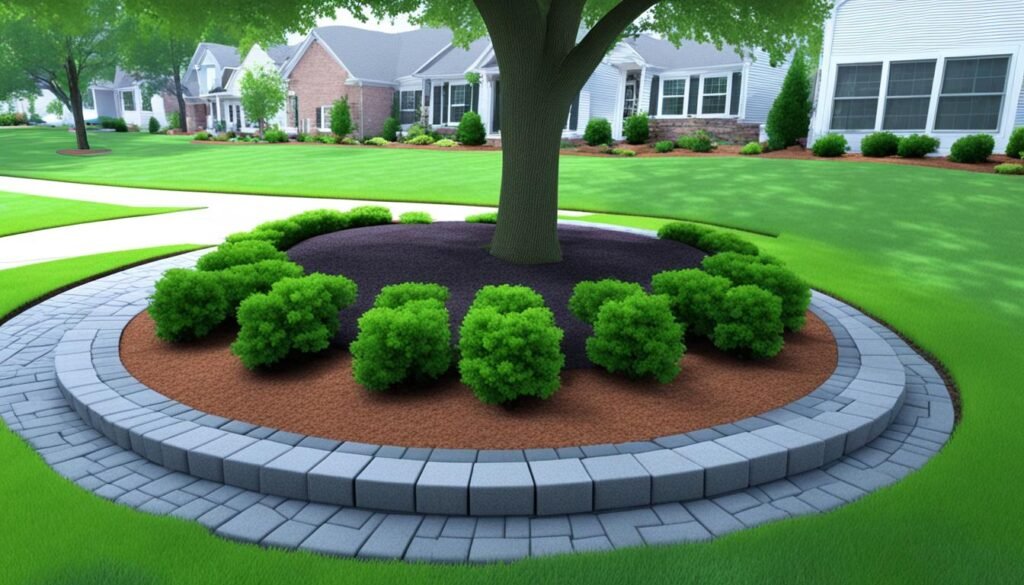
Paving stones offer a durable and long-lasting alternative for tree edging. They can be arranged in various patterns, adding a touch of elegance and sophistication to your landscaping. Paving stones also provide a solid barrier, preventing weeds from encroaching on the tree’s base. Make sure to level the ground properly, lay a solid base, and secure the paving stones with the appropriate adhesive or joint compound.

These are just a few of the many alternative options available for tree edging besides landscape fabric. Choose the one that best suits your preferences, budget, and desired aesthetics. Don’t be afraid to get creative and experiment with different materials to achieve a unique and personalized look for your outdoor space.

tree landscaping block placement

Pros and Cons of Alternatives to Landscape Fabric

Alternatives Pros Cons
Mulch
  • Enhances aesthetic appeal
  • Retains soil moisture
  • Suppresses weed growth
  • Requires periodic replenishment
  • Potential for mold or pests if not properly maintained
Decorative Rocks
  • Natural and visually appealing
  • Excellent drainage
  • Effective weed control
  • Can be more expensive
  • Heavy and difficult to move
Paving Stones
  • Durable and long-lasting
  • Adds elegance and sophistication
  • Effective weed barrier
  • Requires proper leveling and installation
  • More expensive than other alternatives

Conclusion

Installing landscaping blocks around trees is a simple yet effective way to transform your outdoor space. By following a DIY tree landscaping block guide, you can enhance the appearance of your yard while providing various benefits to your trees. Whether you choose to use landscape fabric, mulch, or alternative materials for edging, it’s crucial to ensure proper installation techniques to promote the health and longevity of your trees.

If you feel unsure about the process or need assistance, it is recommended to hire Local Landscaping Pros in Murrieta. Their team of experienced professionals can provide expert guidance and handle the project efficiently. Visit their website at //landscapingcompaniesinmurrietaca.com/ to learn more about their services and get in touch with them for a personalized consultation.

By investing in professional assistance, you can ensure your tree landscaping block project is executed with precision and meets your desired aesthetic goals. So, take advantage of Local Landscaping Pros’ expertise and turn your outdoor space into a stunning oasis that enhances the beauty and value of your property.

FAQ

What is the process for installing landscaping blocks around trees?

Follow these step-by-step instructions to install landscaping blocks around your trees:

What are the advantages and disadvantages of using landscape fabric around trees?

Landscape fabric can offer several benefits when used around trees, such as preventing competition from weeds and insulating the soil. However, it also has some disadvantages.

Are there alternatives to landscape fabric for edging around trees?

Yes, there are alternative options for edging around trees, such as using mulch or other materials.

How can landscaping blocks enhance the appearance of outdoor spaces?

Installing landscaping blocks around trees is a great way to enhance the appearance of your outdoor space and provide various benefits to your trees.

Where can I find professional help for landscaping block installation in Murrieta?

If you’re unsure about the process or need assistance, consider hiring Local Landscaping Pros in Murrieta. For more information, visit their website at //landscapingcompaniesinmurrietaca.com/.

Source Links

Easy Guide to Install Stone Tree Rings

how to install stone tree rings

Did you know that a well-designed backyard can increase the value of your property by up to 20%? It’s true! Investing in your outdoor space not only enhances curb appeal but also provides a relaxing and enjoyable environment for you and your family. One simple yet effective way to transform your backyard is by installing stone tree rings. These decorative rings not only add a professional touch to your landscape but also help protect and nourish your trees.

Key Takeaways:

  • Installing stone tree rings can significantly upgrade your backyard landscape.
  • Stone tree rings provide a neat and polished border between the lawn and the tree.
  • They prevent grass and weeds from competing with the tree for essential nutrients and moisture.
  • Proper installation of stone tree rings is crucial for tree growth and maintenance.
  • Whether you’re a DIY enthusiast or seeking professional assistance, this guide will walk you through the step-by-step process of installing stone tree rings.

What is a Tree Ring and its Benefits

A tree ring is a circular band made of metal, plastic, or stone that encircles a tree when planted in a lawn or paving. It serves several purposes, providing numerous benefits for both the tree and the surrounding landscape.

The Benefits of Tree Rings

  • Prevents grass and weeds from competing with the tree for moisture and nutrients
  • Creates a neat border between the lawn and the tree, giving your landscape a polished look
  • Allows for easy watering and feeding of the tree, ensuring its proper growth and health

Tree rings come in various sizes, ranging from 30cm to 120cm, depending on the ultimate size of the tree. Choosing the right size is crucial for proper installation and tree growth. A tree ring that is too small may restrict the tree’s root growth, while a ring that is too large may allow for excess weed growth. It’s important to consider the mature size of the tree and select a ring that provides ample space for the roots to thrive.

By incorporating tree rings into your landscape design, you not only enhance the aesthetic appeal but also create an environment that promotes the overall health and vitality of your trees.

How to Install Stone Tree Rings

When it comes to enhancing the aesthetics and functionality of your landscape, installing stone tree rings is a popular choice. Whether you want to give your backyard a professional look or create a defined border around your trees, stone tree rings can transform your outdoor space. In this section, we will guide you through the process of fitting and installing tree rings, ensuring a seamless and beautiful result.

fitting a tree ring

Fitting Tree Rings Before Planting

One method of installing tree rings is to fit them before planting the tree. This approach allows for a neat and precise installation. Here’s how to do it:

  1. Start by measuring the diameter of your tree trunk and choose a tree ring with a slightly larger diameter for a proper fit.
  2. Identify the desired location for the tree ring and mark the area.
  3. Using a spade or a sharp knife, cut along the marked circle, removing the turf.
  4. Position the tree ring in the cut-out area, ensuring it is snugly fitted around the tree trunk.
  5. Press down on the ring to secure it in place, making sure it is level with the surrounding ground.

Fitting Tree Rings Retrospectively

If you already have trees planted in your lawn and want to add tree rings retrospectively, follow these steps:

  1. Determine the desired depth for the tree ring, taking into account the root system of your tree.
  2. Carefully cut down to the desired depth, creating a circular trench around the tree.
  3. Place the tree ring in the trench, ensuring it is positioned securely around the tree trunk.
  4. Use bolts or other appropriate methods to secure the tree ring in place.
  5. Level the tree ring with the surrounding ground, ensuring it protrudes slightly above the turf height for easy mowing.

Remember, when installing stone tree rings, it’s important to choose the right size and material for your specific tree. Consider the ultimate size of the tree and its growth potential to ensure the ring provides adequate space for future growth.

Now that you have successfully installed your stone tree ring, you can enjoy its benefits for years to come. But before we conclude, let’s explore the advantages of using tree rings versus mulch.

Conclusion

Transform your backyard into a stunning and professional-looking landscape with the easy installation of stone tree rings. By following our step-by-step guide, you can upgrade the appearance of your garden without much hassle. Stone tree rings not only enhance the overall aesthetic but also offer numerous benefits for the growth and maintenance of your trees.

Whether you are a DIY enthusiast or prefer professional assistance, installing stone tree rings is a worthwhile project that can completely revamp your outdoor space. The easy installation process outlined in our guide ensures that you can achieve impressive results without being overwhelmed. With just a few simple steps, you can create a defined border around your trees, preventing weeds and grass from competing for moisture and nutrients.

By choosing stone tree rings, you not only add a touch of elegance to your backyard but also provide a practical solution for watering and feeding your trees. The durable and long-lasting nature of stone makes it a perfect material for creating a reliable and attractive tree ring. Whether you have a small garden or a larger landscape to transform, stone tree rings offer a versatile and aesthetically pleasing solution.

So, why settle for a boring backyard when you can have a professionally upgraded landscape? Install stone tree rings today and enjoy the transformation of your outdoor space into a beautiful and well-designed haven. Enhance the overall look of your garden, promote the health of your trees, and create a space that you can truly relax in and enjoy.

FAQ

Are stone tree rings difficult to install?

No, with our step-by-step guide, installing stone tree rings is a straightforward process that can be easily done as a DIY project.

What are the benefits of using stone tree rings?

Stone tree rings not only enhance the appearance of your backyard, but they also help prevent grass and weeds from competing with the tree for moisture and nutrients. They create a neat border and make watering and feeding the tree easier.

What sizes do stone tree rings come in?

Stone tree rings come in various sizes, ranging from 30cm to 120cm. Choosing the right size is important to ensure proper installation and tree growth.

How do I install stone tree rings?

There are two methods for installing stone tree rings. The first method is fitting them before planting the tree, which involves cutting a circle in the turf, removing the turf, and placing the ring around the tree. The second method is fitting them retrospectively, which requires cutting down to the desired depth, placing the ring around the tree, and securing it with bolts.

Can I use mulch in addition to stone tree rings?

Yes, you can use mulch in addition to stone tree rings for added benefits. Mulch helps retain moisture and suppresses weed growth, while the stone tree ring prevents grass from growing around the trunk and taking nutrients from the tree.

Where can I get professional assistance for installing stone tree rings in Murrieta?

If you’re in the Murrieta area, you can rely on Local Landscaping Pro for expert assistance with installing stone tree rings. Visit //landscapingcompaniesinmurrietaca.com for more information.

Source Links